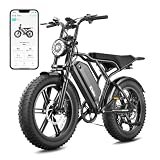
Best Electric Bikes 2026: Top Picks by Rider Type, Range and Comfort
Research-Based — compiled from manufacturer specs, verified owner feedback and retailer data
Last updated: October 2026
The hardest part of buying an e-bike in 2026 is not finding a powerful one. It is finding the right kind of power, in the right frame, for the riding you actually do. A bike that shines on a Saturday trail can be a daily frustration if you must haul it up stairs on Monday. A compact folder that solves your train commute may struggle on the steep hill after the station.
Quick Summary
- Top pick overall: PUCKIPUPPY Labrador Pro — torque-sensing assist, full suspension and a 960Wh battery (48V × 20Ah).
- Best commuter: Gotrax Dolphin — an easy step-through frame, UL 2849 certification and a city-friendly 20 mph top speed.
- Best for stability: NARRAK S180 — three wheels and hydraulic brakes on all three rotors, so no balancing is required.
- Cheapest pick: QNUT Victor — listed at $339.99 when checked, yet still with a 21-speed drivetrain and UL 2849 certification.
- Longest-range pick: PUJH PU3 — up to 110 miles claimed in its gentlest mode from a 1,200Wh battery; expect far less in hard use.
- Who this guide is for: US riders choosing by rider type first — commuting, folding, cargo, trike, trail, moped-style or budget — not by headline wattage.
This guide is therefore organised by rider type first and specifications second. The eight models below cover the main jobs US buyers hire e-bikes for: all-terrain riding, city commuting, high-output off-road work, folding portability, errands and cargo, three-wheel stability, moped-style performance and budget value. Each pick involves a compromise — weight against battery size, speed against legality, refinement against price.
Three caveats apply throughout. Headline range is recorded in the gentlest assist mode, on flat ground, with a lighter rider, so treat every maximum as a ceiling, not a promise. Headline wattage is usually a brief peak figure, not sustained output. And several bikes here exceed the 28 mph Class 3 ceiling in most states, which can change where you may legally ride. Start with the buying guide if the categories are new to you, or jump to your rider type below.
How We Researched This Guide
We are the EBikePeak team, and we built this guide as desk research, not as a test report. We compiled each model’s manufacturer specifications and retailer listings, cross-checked them against verified owner feedback, and converted every battery to watt-hours (volts × amp-hours) so the eight bikes could be compared on equal terms. Where sources disagreed, we used the manufacturer’s specification figure and said so in the relevant section — retailer headlines do not always match the spec sheet underneath them. We have not ridden these bikes, and we claim no hands-on findings: range, comfort and durability judgements here are inferences from specifications and owner reports, which is exactly what “Research-Based” means on this site. All prices and specifications were checked at the time of writing, in October 2026; both change frequently, so confirm them before you buy.
Quick Picks
- Best for adventure and trail riding: PUCKIPUPPY Labrador Pro
- Best for city commuting: Gotrax Dolphin
- Best for high-power off-road riding: PUJH PU3
- Best for folding portability: Gotrax R1
- Best for errands and cargo: EUY CityRang 4.0
- Best for stability and accessibility: NARRAK S180
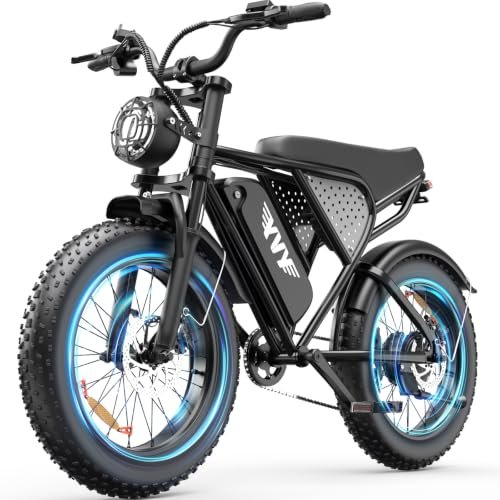
- Best for moped-style performance: YVY K20
- Best for budget buyers: QNUT Victor
1. PUCKIPUPPY Labrador Pro — Best for Adventure and Trail Riding
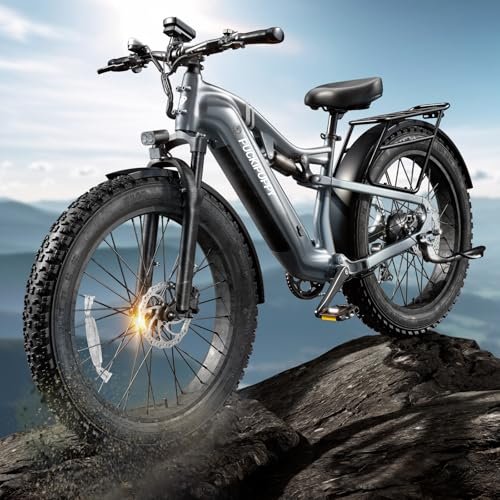
The Labrador Pro is the most rounded option here for riders who want one bike for weekday roads and weekend trails. Its key feature is not the 1,350W peak rear hub motor but the torque sensor paired with it: assistance scales with how hard you pedal, rather than switching on as the cranks turn. That feels smoother pulling away, helps on climbs, and can be easier on your knees than a cadence system.
Wide 26″ × 4″ tyres, full suspension — a front fork plus an unusual transverse rear design — and a large 48V 20Ah battery (960Wh) support that mixed-terrain brief. The brand rates torque at 85 Nm, a strong figure for a hub-drive bike and the number that matters most on steep starts. The quoted 40–80 mile range is wide for a reason: assist level, hills, rider weight and temperature move the real result a long way. Charging the removable pack takes a stated 6–8 hours. The 6061 aluminium frame comes with a useful bundle — rack, mudguards, pump, lock, mirrors and phone mount — and the bike was listed at $1,139.98 when checked, against a $1,398.99 list price.
| Spec | Detail |
| Motor | 1,350W peak, brushless rear hub |
| Battery | 48V 20Ah, removable |
| Range | 40–80 miles, depending on mode |
| Top speed | 28 mph pedal-assist, 20 mph throttle |
| Weight | Not specified |
| Drivetrain / Brakes | 8-speed / Dual hydraulic disc, 180mm |
What we like:
- Torque-sensing assist that follows pedalling effort
- Full suspension and fat tyres for mixed surfaces
- Large removable battery; generous accessory bundle
- Hydraulic braking suited to a faster, heavier bike
What to consider:
- Real range varies widely with terrain and assist
- Heavier and less nimble on plain pavement
- More bike than a flat, short commute needs
Who it’s for: Riders splitting time between roads and trails who want comfort, climbing help and range from one machine. If you need a light bike to carry indoors, choose a folder below.
Who should skip it: Riders with a flat, short commute on plain pavement should skip it, as this is more bike than that ride needs.
2. Gotrax Dolphin — Best for City Commuting
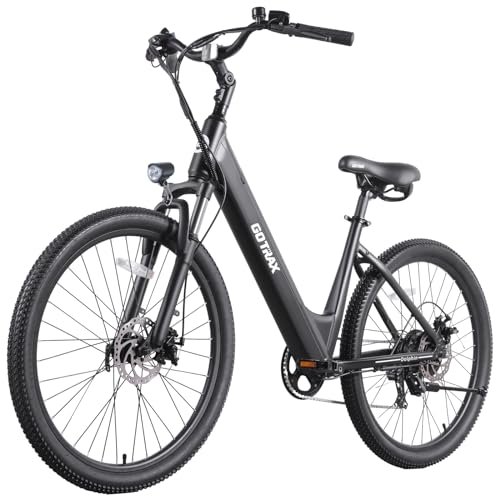
The Dolphin takes the opposite approach: instead of maximum output, it makes an ordinary city ride easy to start, stop and live with. The step-through frame lets you get on and off without swinging a leg over a high tube — genuinely useful in work clothes, in traffic, and for riders who prefer a lower mount.
A 350W continuous motor peaking at 500W and a 20 mph top speed keep it in sensible commuter territory. Range is quoted at up to 30 miles assisted and about 15.5 miles on electric power alone, suiting predictable daily distances rather than touring. Front suspension, standard 26″ tyres, dual disc brakes and a short boost function for junctions or brief rises complete the package. Owner feedback commonly notes assembly in under half an hour and a battery that copes with regular daily use, while UL 2849 certification matters if you charge at home or work. At $549.99 when checked, it sits at the affordable end of certified commuters.
| Spec | Detail |
| Motor | 350W continuous, 500W peak |
| Battery | 48V, 280.8Wh, removable |
| Range | Up to 30 miles assisted, 15.5 miles pure electric |
| Top speed | 20 mph |
| Weight | Not specified |
| Drivetrain / Brakes | 7-speed Shimano / Dual disc |
What we like:
- Step-through frame, easy to mount and dismount
- Calm, uncomplicated 20 mph commuter performance
- UL 2849 certified electrical system
- 365-day parts support, longer than many rivals
What to consider:
- Range shortens quickly at higher assist levels
- Not built for steep hills or off-road routes
- Front suspension only
Who it’s for: Urban commuters, errand runners and returning cyclists wanting an approachable daily bike. Hilly, long or unpaved routes will outgrow its motor and battery.
Who should skip it: Skip it if you ride steep hills or off-road routes, which this bike is not built for.
3. PUJH PU3 — Best for High-Power Off-Road Riding
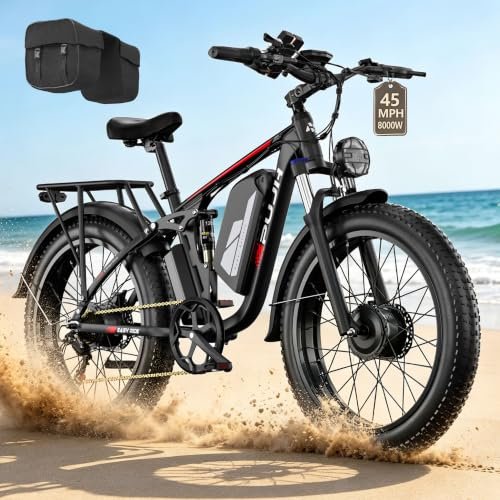
The PU3 is this guide’s outlier, and it should be bought with eyes open. It lists a 6,000W peak dual-motor system, a 60V battery of about 1,200Wh, and a 45 mph top speed. Those are not commuter numbers. In most US states a 45 mph bike sits outside the Class 1, 2 and 3 definitions for public roads and bike paths, so check the rules for where you intend to ride — private land is a different matter from a city cycle lane.
Within that brief, the specification is coherent: fat 24″ × 4″ tyres, full suspension plus seat springs, dual hydraulic brakes and a 330 lb payload rating, aimed at heavier riders or loads over difficult ground. The 35–110 mile range spread reflects mode choice — running both motors hard drains even a large battery fast — and modes include walk assist and cruise control. Two cautions: at over 82 lbs it is very heavy to lift or transport, and its pool of owner reviews is still small (just 34 ratings on its main listing), so long-term durability evidence is limited. Note also that the $1,379 listing headline advertises an even higher wattage figure than the 6,000W peak in the specification table; we have used the specification figure throughout.
| Spec | Detail |
| Motor | 6,000W peak, dual motor |
| Battery | 60V, 1,200Wh, removable |
| Range | 35–110 miles, depending on mode |
| Top speed | Up to 45 mph |
| Weight | 82+ lbs |
| Drivetrain / Brakes | 7-speed / Dual hydraulic disc |
What we like:
- Exceptional power for steep grades and heavy loads
- Very large battery; strong 330 lb payload rating
- Full suspension and fat tyres for rough ground
- Multiple modes, including walk assist and cruise control
What to consider:
- 45 mph is not street-legal as a standard e-bike in many places
- Very heavy to store, lift or transport
- Limited long-term owner feedback so far
Who it’s for: Experienced off-road and rural riders who genuinely need dual-motor pulling power. A poor fit for apartments or anyone who regularly carries a bike.
Who should skip it: Skip it if you need a standard street-legal e-bike, or a bike light enough to store, lift or transport easily.
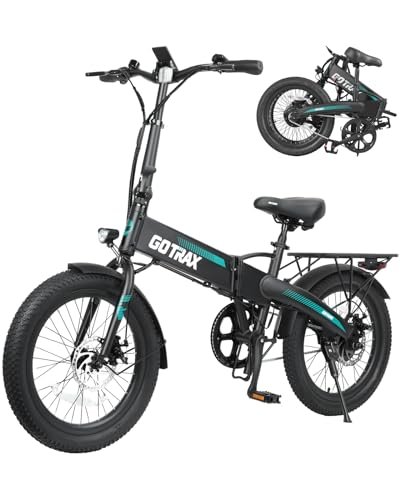
4. Gotrax R1 — Best for Folding Portability
A folding e-bike is a storage solution that also moves. The R1 folds to about 37.4″ × 17.7″ × 27.5″ — small enough for many car boots, a corner of a small flat, or a spot beside you on transit. At 45 lbs it is manageable rather than light: fine for short lifts, less welcome on long stair carries.
On the road it uses a scaled-down commuter recipe: 350W continuous, 500W peak, 20 mph, and up to 25 miles assisted, or about 15.5 miles unassisted. Smaller 20″ wheels with 2.6″ tyres keep the folded package compact. A 5-speed drivetrain is simple but offers fewer hill options than 7- or 8-speed rivals, and there is no suspension, so cracked pavement is felt directly; smooth urban routes suit it best. Fit needs checking — feedback suggests riders around 5′6″ and taller are often comfortable, while those under about 5′3″ should confirm the minimum recommended height. UL 2849 certification and 365-day parts support match the Dolphin, as does the value context: $659.99 when checked.
| Spec | Detail |
| Motor | 350W continuous, 500W peak |
| Battery | 48V 7.8Ah, 374.4Wh |
| Range | Up to 25 miles assisted, 15.5 miles pure electric |
| Top speed | 20 mph |
| Weight | 45 lbs |
| Drivetrain / Brakes | 5-speed / Dual disc |
What we like:
- Compact folded size for cars, transit and small homes
- UL 2849 certified, with a clear ride-data display
- Solid-feeling build for a folder, per owner feedback
- Straightforward 20 mph city performance
What to consider:
- No suspension, so uneven roads feel harsh
- Five gears limit steeper routes
- Range targets short-to-medium commutes
Who it’s for: Multi-modal commuters, drivers wanting a bike that lives in the car, and anyone ruled by storage space. For more folding options, see our reviews.
Who should skip it: Skip it if your routes are steep or rough, where five gears and no suspension will feel limiting.
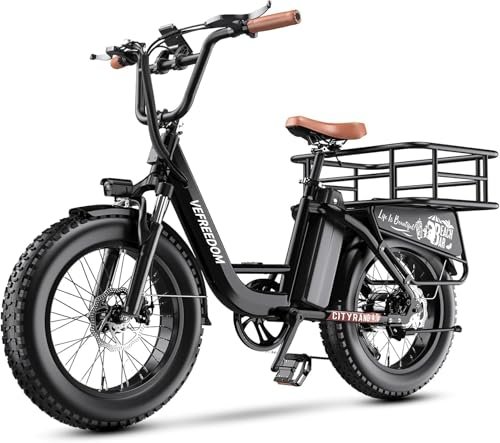
5. EUY CityRang 4.0 — Best for Errands and Cargo
Some bikes are bought to go somewhere; this one is bought to bring things back. A step-through frame, 20″ × 4″ fat tyres and a rear basket included in the box make it ready for groceries and market trips without an immediate accessories order. The fat tyres help it feel planted when loaded, and the low frame is easier to mount with a full basket.
Its electrics are stronger than the utility styling suggests: a 1,500W peak motor and a 48V 20Ah removable battery, with range quoted up to 70 miles, give headroom for longer errand routes and the extra energy carrying weight demands. Suspension is front-only, and the carbon steel frame aids value but not weight — at about 71 lbs you will not want to lift it often. One caveat is transparency: published detail is thinner than for several rivals, and a top speed is not specified in the data available here, so check the current listing carefully if exact figures matter to you. It was listed at $799.99 when checked, down from $899.99.
| Spec | Detail |
| Motor | 1,500W peak |
| Battery | 48V 20Ah, removable |
| Range | Up to 70 miles |
| Top speed | Not specified |
| Weight | 71 lbs |
| Drivetrain / Brakes | 7-speed / Disc |
What we like:
- Rear basket included, ready for shopping
- Step-through frame suits varied riders
- Large battery for longer loaded trips
- Fat tyres add stability under cargo
What to consider:
- Steel frame makes it one of the heavier picks
- Less published specification detail than rivals
- Front suspension only
Who it’s for: Errand riders and light cargo users wanting a stable, basket-ready step-through. Riders who must lift a bike regularly should look elsewhere.
Who should skip it: Skip it if you need to lift the bike often, as its steel frame makes it one of the heavier picks.
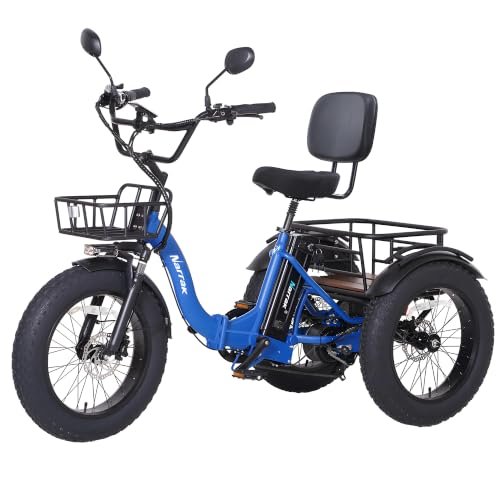
6. NARRAK S180 — Best for Stability and Accessibility
For some riders the key specification is not speed or range; it is not having to balance at all. The S180, the only three-wheeler here, lets you stop and load shopping without putting a foot down. For older riders, people returning after injury, and anyone with balance concerns, that confidence can be the difference between riding and not riding.
The engineering supports the brief. A differential rear axle lets the rear wheels turn at different speeds in corners, making turns feel more controlled than on cruder trikes. Hydraulic discs across three rotors give strong stopping when loaded or descending, with a parking brake for slopes. Front and rear baskets and a folding aluminium step-through frame add everyday practicality. Power is a 750W continuous motor peaking at 1,350W, with a 48V 13Ah (624Wh) UL-certified battery and up to 50 miles assisted. Fat 20″ × 4″ tyres and dual suspension aim for a settled ride. Limits: the 290 lb payload is lower than some two-wheel cargo bikes, and any trike needs more storage width and is harder to transport. Listed at $1,089 when checked, it costs more than most two-wheel commuters here — the premium is the third wheel and the hydraulic braking that comes with it.
| Spec | Detail |
| Motor | 750W continuous, 1,350W peak |
| Battery | 48V 13Ah, 624Wh, UL certified |
| Range | Up to 50 miles, pedal-assist |
| Top speed | Not specified |
| Weight | Not specified |
| Drivetrain / Brakes | 7-speed / Hydraulic disc, 3 rotors |
What we like:
- Three-wheel stability; no balancing required
- Differential axle improves cornering
- Hydraulic braking on three wheels, plus parking brake
- Front and rear baskets; US-based support
What to consider:
- Wider and harder to store and transport
- 290 lb payload is modest for cargo use
- Not for speed-focused or space-short riders
Who it’s for: Seniors, riders with balance or mobility limitations, and load carriers wanting an upright, stable platform. If you move a bike by car often, choose a folder.
Who should skip it: Skip it if you are short on storage space or want a faster ride, as it is wider and harder to store and transport.
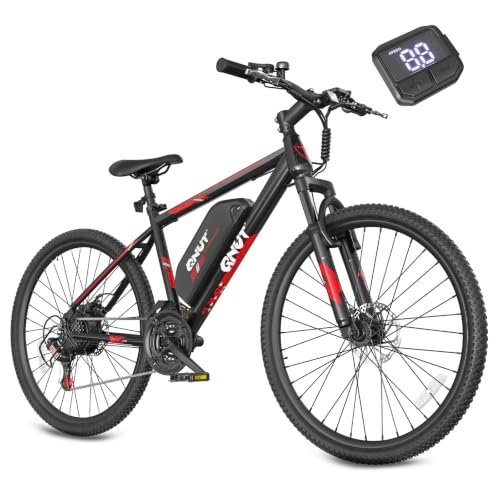
7. YVY K20 — Best for Moped-Style Performance
The K20 suits riders who find a conventional commuter too polite. Moped-inspired styling, a 1,500W peak motor, full suspension and a 35 mph top speed put it in performance territory — and, like the PU3, that speed exceeds the 28 mph Class 3 ceiling, so where you can legally use it in full depends on your state and setting.
Two features lift it above styling. Braking pairs dual hydraulic discs with an electronic anti-lock system (EABS), intended to reduce skidding on steep or wet descents — important on a faster machine. And certification is unusually broad at this price: triple UL cover for the electrical system, battery pack and charger, which carries real weight if you charge indoors. Range is quoted up to 100 miles assisted and about 40 miles unassisted from the 48V 20Ah (960Wh) removable battery, though the assisted figure will require gentle use. The high-carbon steel frame adds weight, and no total weight is specified in the available data. As a newer brand, it has fewer long-term owner reviews than the Gotrax models. Price context is striking: $549 when checked (list $579) is budget-bike money for a 960Wh battery and triple certification — and one specification conflict is worth flagging, because a retailer headline for this model has also shown a smaller 15.6Ah battery figure. Confirm the pack size on the actual listing before ordering.
| Spec | Detail |
| Motor | 1,500W peak |
| Battery | 48V 20Ah, 960Wh, removable |
| Range | Up to 100 miles assisted, 40 miles pure electric |
| Top speed | 35 mph |
| Weight | Not specified |
| Drivetrain / Brakes | 7-speed / Dual hydraulic with EABS |
What we like:
- Triple UL certification for bike, battery and charger
- Hydraulic brakes with electronic anti-lock help
- Full suspension; strong quoted assisted range
- Real climbing power in a moped-style design
What to consider:
- 35 mph exceeds US Class 3 limits
- Steel frame adds weight; total weight not specified
- Newer brand, fewer long-term reviews
Who it’s for: Riders wanting moped-like pace, strong certification and full suspension for hills and mixed terrain. Path riders bound by speed limits need a calmer model.
Who should skip it: Skip it if you need a bike within US Class 3 limits, as its 35 mph top speed exceeds them.
8. QNUT Victor — Best for Budget Buyers
The Victor’s strongest argument is one many pricier bikes cannot match: a 21-speed drivetrain. More gears mean finer control of pedalling effort, better climbing efficiency and less reliance on the motor for every gradient — practical, not a gimmick, on a budget 26″ commuter.
The motor is 350W continuous with a 1,000W peak, and the removable 36V 10.4Ah battery stores 374.4Wh. Range is quoted up to 45 miles assisted and about 25 miles on throttle, at up to 28 mph assisted — figures that will require modest assist, since the smaller battery is the clearest gap between this bike and the long-range models above. Narrower 26″ × 1.95″ tyres favour pavement efficiency over soft-ground grip. Costs are contained visibly: a durable steel frame brings weight to about 61.7 lbs, and mechanical disc brakes need more hand effort and feel less consistent in the wet than hydraulics. Against that, it carries UL 2849 certification, IP54 resistance to light rain, and arrives around 90% pre-assembled with tools included. At $339.99 when checked (list $399.99), it is the cheapest bike in this guide by a clear margin.
| Spec | Detail |
| Motor | 350W continuous, 1,000W peak |
| Battery | 36V 10.4Ah, 374.4Wh, removable |
| Range | Up to 45 miles assisted, 25 miles throttle |
| Top speed | 28 mph, pedal-assist |
| Weight | 61.7 lbs |
| Drivetrain / Brakes | 21-speed / Dual mechanical disc |
What we like:
- 21-speed gearing is rare and useful at this price
- UL 2849 certified; removable battery
- IP54 light-rain resistance; mostly pre-assembled
- Accessible price for a first e-bike
What to consider:
- Steel frame is heavy for its class
- Mechanical brakes are weaker in wet conditions
- Narrow tyres limit loose-surface grip
Who it’s for: First-time buyers, teenagers and budget commuters wanting proper gearing and certified electrics. Demanding trails or heavy cargo call for a bigger spend.
Who should skip it: Skip it if you often ride loose surfaces or in wet conditions, where narrow tyres and mechanical brakes limit grip.
Buying Guide: How to Choose
Motor Power: Peak Is Not the Whole Story
Wattage shapes how a bike handles hills, headwinds and loads, but advertised figures mislead if read naively. Peak wattage is a short burst; continuous (nominal) wattage is what a motor sustains, and it is the better guide to everyday climbing. Comparing one brand’s peak with another’s continuous rating is the commonest buying mistake in this market.
Roughly, 350–750W covers flatter commuting and lighter riders; 1,000–1,500W peak adds confidence on mixed terrain and steeper routes; outputs well beyond that are specialist territory with legal, weight and braking consequences. For scale, the US federal definition of a low-speed electric bicycle assumes a motor under 750W — several bikes here exceed that on peak output alone. Torque, in Newton-metres, matters just as much at low speed, and torque-sensing assistance — as on the Labrador Pro — generally feels stronger and more natural than cadence-only systems.
Battery and Range: Compare Watt-Hours
Watt-hours are the fairest way to compare batteries: multiply volts by amp-hours. A 48V 20Ah pack stores 960Wh; a 36V 10.4Ah pack about 374Wh. Then discount headline miles: manufacturers test in favourable conditions, so planning on roughly 40–60% of a stated maximum in mixed use is prudent. Broadly, under 400Wh suits 15–25 real miles, 400–600Wh about 25–40, and 600–1,000Wh about 35–60. A removable battery is worth prioritising if you charge away from where the bike is stored. See also the buying guide.
Brakes: Match Them to Speed and Weight
Hydraulic disc brakes need less hand force, modulate more smoothly, self-adjust for pad wear and stay more consistent in the wet. Mechanical discs cost less and are easy to adjust at home, and they are adequate on a slower, lighter commuter — but they demand more effort on steep descents. The faster, heavier or more load-carrying the bike, the stronger the case for hydraulics.
Suspension: Comfort Against Weight
A rigid bike is lighter and lower maintenance, but every crack in the road reaches you. Front suspension is the sensible middle ground for most urban riders, easing wrist and arm fatigue on broken pavement. Full suspension earns its place on trails and rough rural routes, at the price of weight, cost and complexity. Tyres interact with this choice: fat tyres (3.5–4″) add cushioning and grip on sand, gravel and snow but roll slower on pavement, while standard tyres (about 1.95–2.6″) feel livelier on roads.
Weight, Payload and Living With the Bike
Weight rarely decides a test ride, but it decides ownership. This guide spans a 45 lb folder and a machine over 82 lbs, and that gap determines whether you can manage stairs, a car rack or a narrow hallway. Rehearse the worst handling job in your routine before buying. Payload matters too: most standard e-bikes rate rider plus cargo at roughly 264–330 lbs, so heavier riders should look for an explicit rating with headroom to spare.
Safety and Certifications
Certification is unglamorous and important, especially for a large lithium battery charged indoors. UL 2849 covers the e-bike electrical system as a whole; UL 2271 covers lithium battery packs specifically. These marks mean independent testing, not a manufacturer’s own assurance. Models here carry differing sets of marks, noted in each section where the data confirms them. If two bikes are otherwise tied, choose the one with clearer, broader certification — and treat vagueness about it as information in itself.
Conclusion
There is no single best electric bike for 2026, only a best match for your riding. Take the Labrador Pro across trails and commuting, the Dolphin for step-through city life, and the R1 when storage shapes everything. Take the CityRang 4.0 when carrying is the point, the S180 when stability is the point, and the K20 or PU3 only when you have the terrain — and legal setting — for their performance. Take the Victor to get started well, with proper gears and certified electrics, at this list’s lowest cost. Whatever you choose, judge it on watt-hours over headline miles, continuous power over peak claims, brakes matched to weight and speed, and a weight you can handle on your worst day. Compare more models in our reviews.
Frequently Asked Questions
Which electric bike is most reliable for adult commuters in 2026?
On certification, parts support and owner feedback, the Gotrax Dolphin and R1 are the most straightforward commuter picks here — both UL 2849 certified, both with 365-day parts support. Choose the Dolphin for a step-through, the R1 if you must fold the bike; for more range or carrying ability, look at the EUY CityRang 4.0 or the Labrador Pro.
What should beginners look for in a first electric bike?
Keep it simple: a Class 1 or 2 bike, a removable battery, independent electrical certification, and gearing that helps on hills — seven speeds or more is a comfortable start. Here, the QNUT Victor suits beginners on a budget, and the Dolphin suits those who value an easy step-through frame.
How do I compare motor power, torque and range fairly?
Compare continuous rather than peak wattage, look for torque in Newton-metres where published, and compare batteries in watt-hours rather than advertised miles. Expect everyday range well below headline maximums; torque-sensing systems also tend to use energy more efficiently, because assistance follows your effort.
Which of these bikes offers the best value?
The QNUT Victor, for its 21-speed drivetrain, UL 2849 certification and removable battery at the lowest price level here. The Dolphin is also strong commuter value given its feedback and parts support. Spending more, the Labrador Pro adds a torque sensor and full suspension — features that usually cost considerably more from established brands.
What is the difference between hub-drive and mid-drive?
A hub motor sits in a wheel, usually the rear, and drives it directly: simpler, common at accessible prices, easy to maintain. A mid-drive sits at the pedals and works through the bike’s gears, usually climbing more efficiently with better weight balance, at higher cost. Every bike here is hub-drive, so steep, technical climbers should also research mid-drive models.
Which bikes here are best for off-road use and outdoor gear?
The PUJH PU3 has the most raw capability — dual motors, full suspension, fat tyres, 330 lb payload — subject to the legal cautions in its section. The Labrador Pro is the more balanced trail option that still commutes well. For outdoor use generally, prioritise payload, fat tyres for soft ground, and walk-assist for slow, loaded manoeuvring.
Disclosure: EBikePeak may earn a commission from qualifying purchases made through links on this page, at no additional cost to you. As an Amazon Associate, EBikePeak earns from qualifying purchases. Prices and availability change frequently — check the retailer listing before you buy.